Crew Chief George Logo

Coming Soon to MSFS 2020

Crew Chief George's

1909 Wright Military Flyer
& 1910 Army Modified Version

Take the controls of the world's first military airplane. Faithfully recreated with stunning historical accuracy, custom engine logic, and a true-to-life flight model.
A Pioneer of the Skies

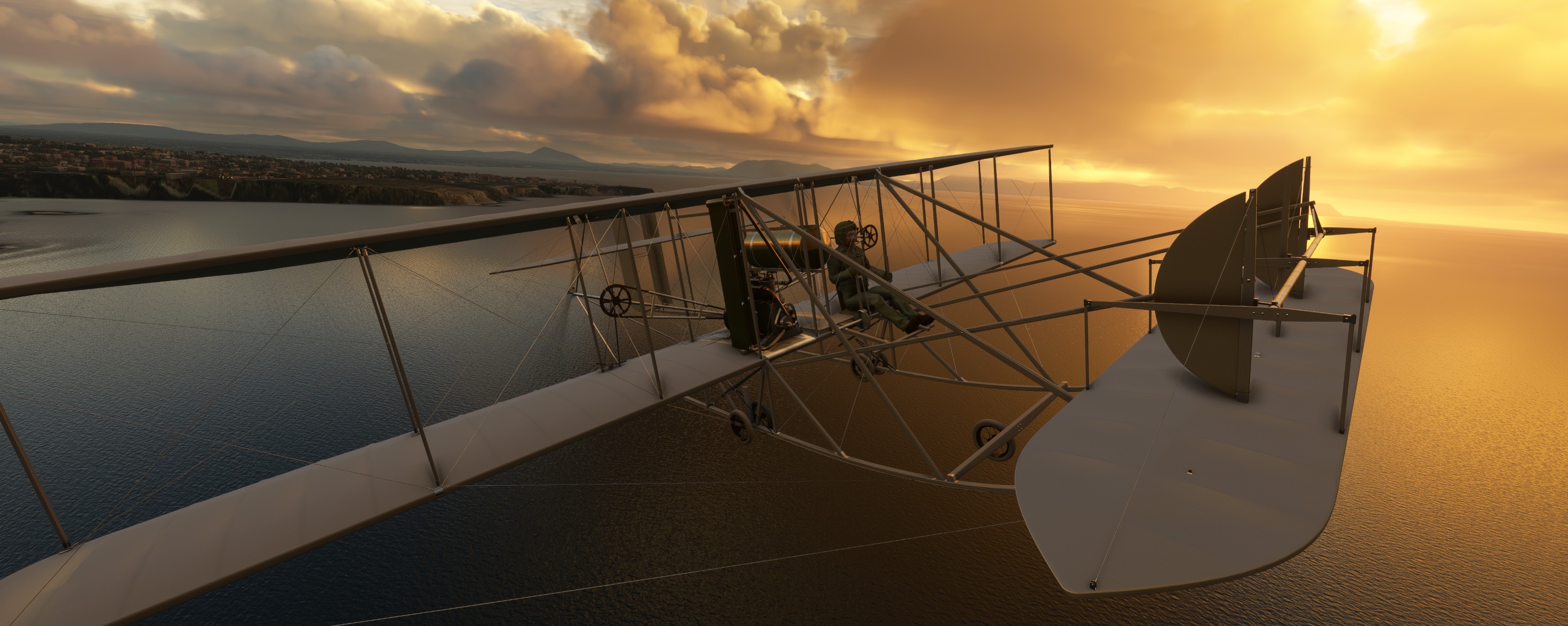
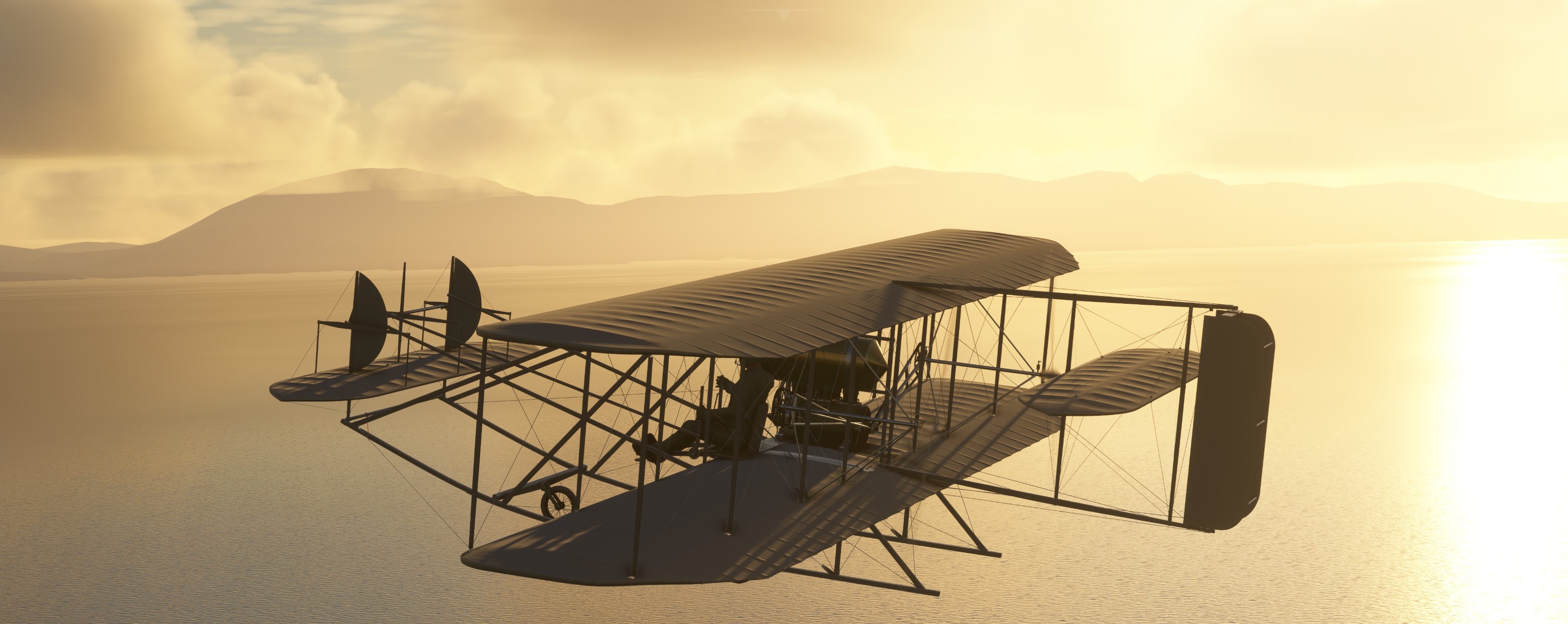
Designed and constructed by Wilbur and Orville Wright to satisfy the demanding requirements of the U.S. Army Signal Corps. Its delicate wood-and-muslin construction and entirely unique control system make it an extraordinary, challenging machine to master.

Wright Military Flyer flying in MSFS Wright Military Flyer cinematic fly-by rear angle in MSFS

Authentic Systems & Management

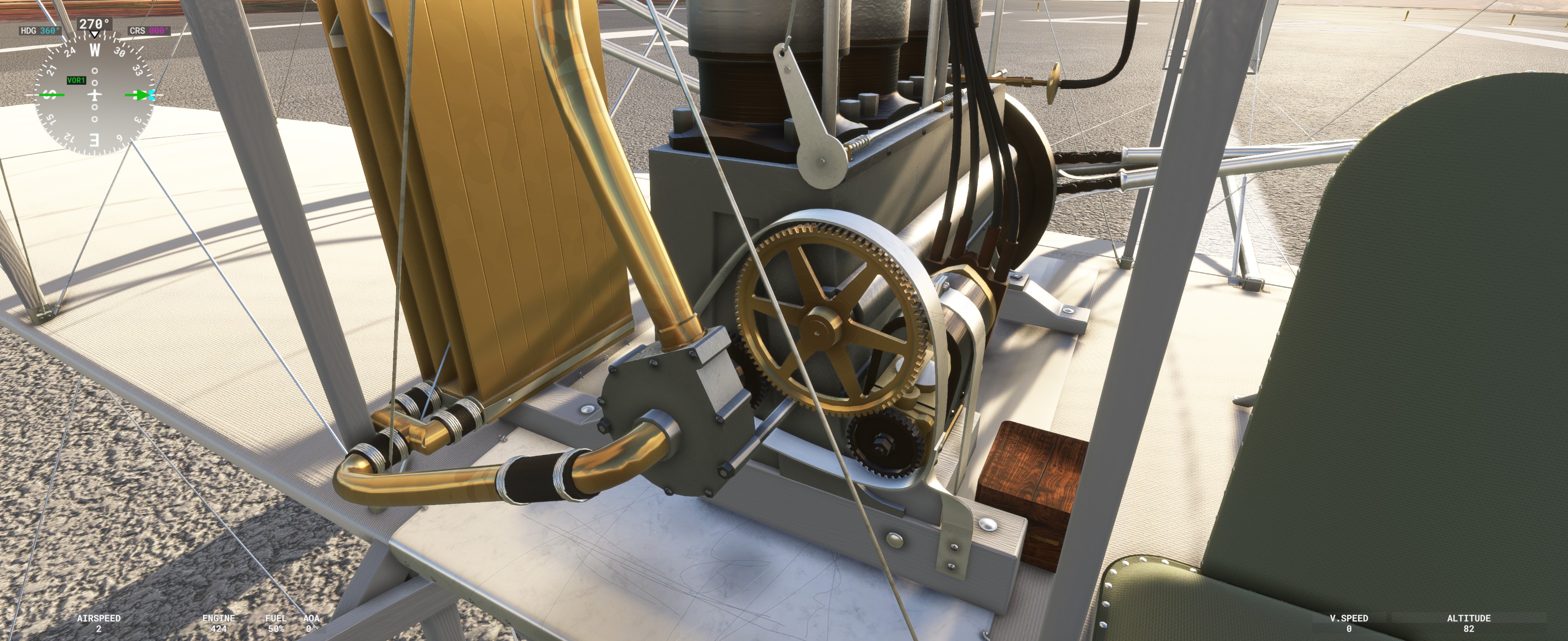
Custom Engine Logic - Fuel petcock and magneto

Custom Engine Logic

There is no throttle! Bypassing default MSFS parameters, this aircraft runs on custom code with only two modes: IDLE and MAX RPM. Manage the fuel petcock and magneto advance lever to build power.

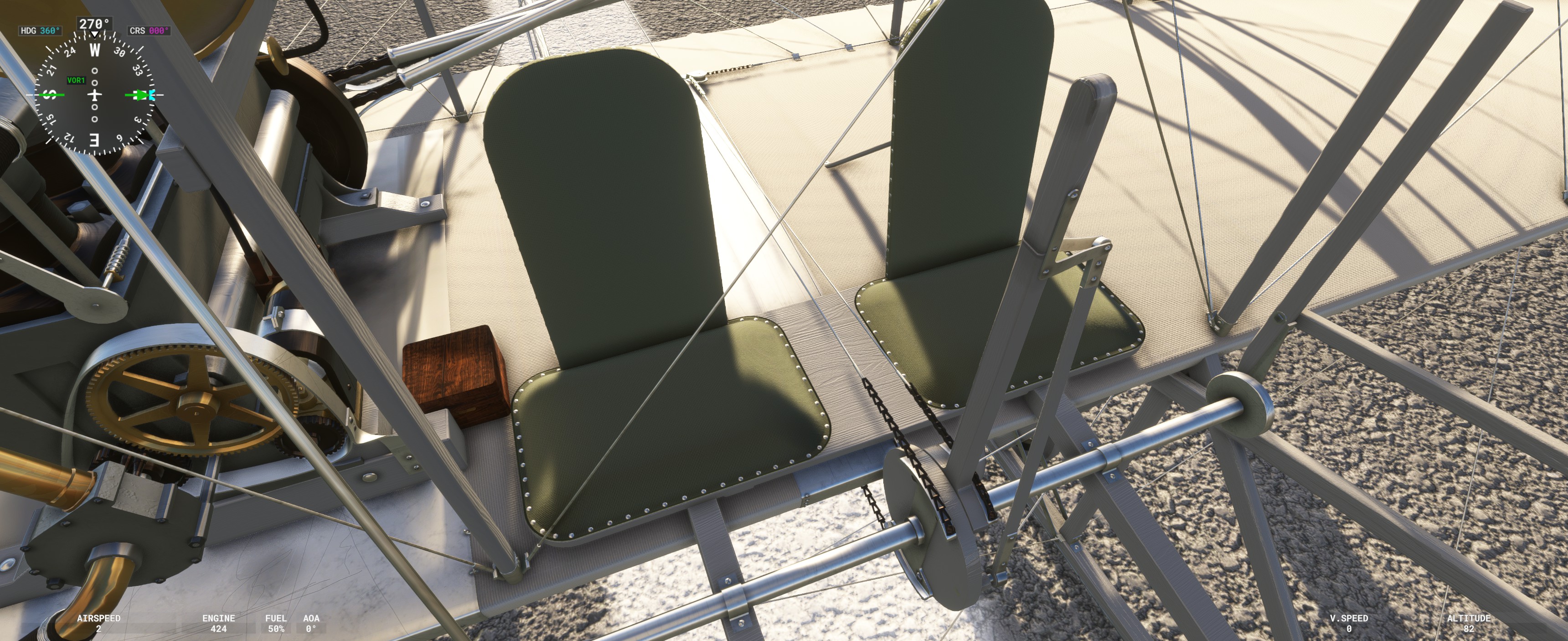
Wing warping and rudder control mechanisms

Wing Warping & Rudder

Unlike modern ailerons, roll is achieved by physically twisting (warping) the trailing edges of the wings. This is fully animated and aerodynamically simulated.

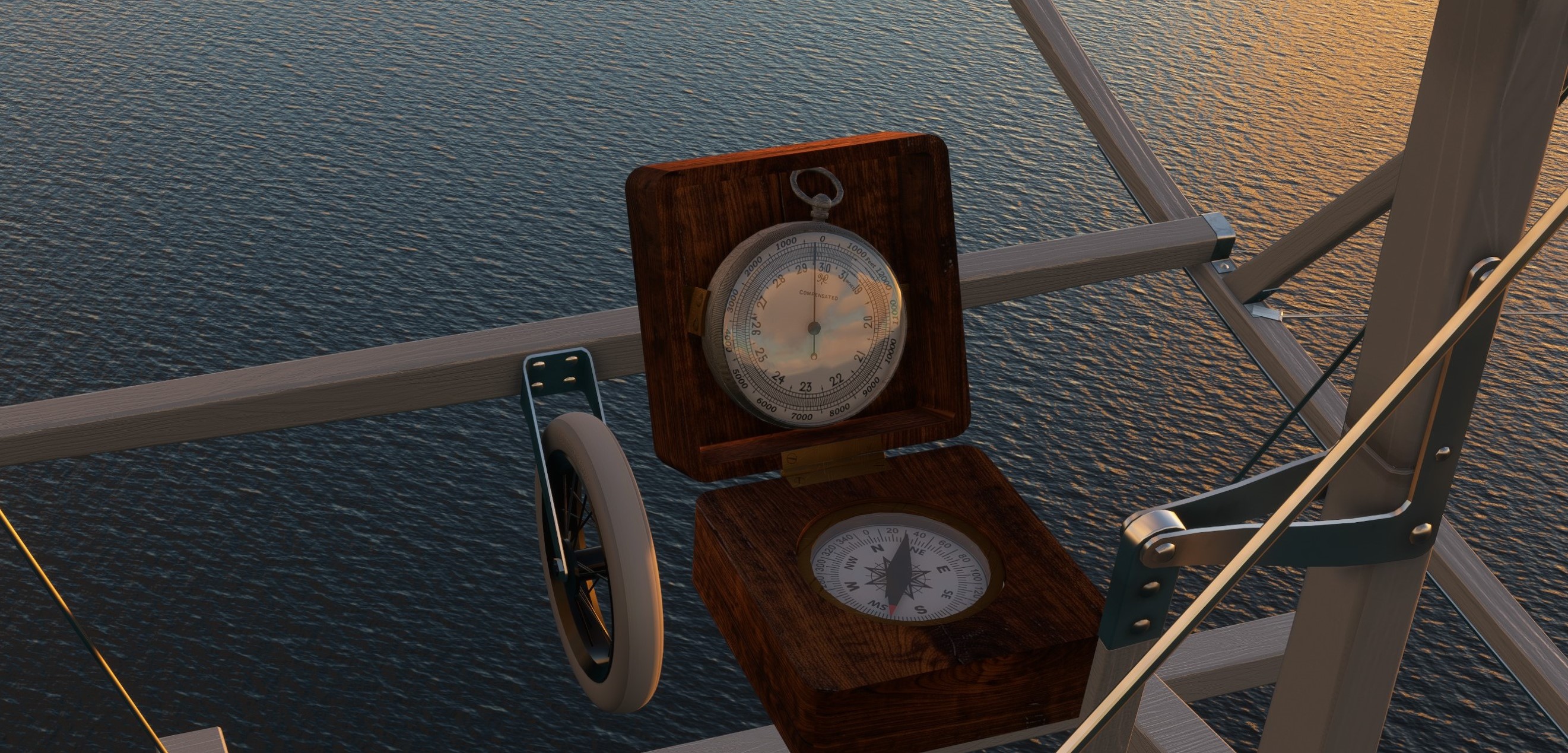
Era-Accurate Instruments including wooden compass

Era-Accurate Instruments

No glass screens here. Navigate using a wooden box compass, an aneroid barometer/altimeter, and a simple weighted cord (rope) relying entirely on gravity for visual bank angle reference.

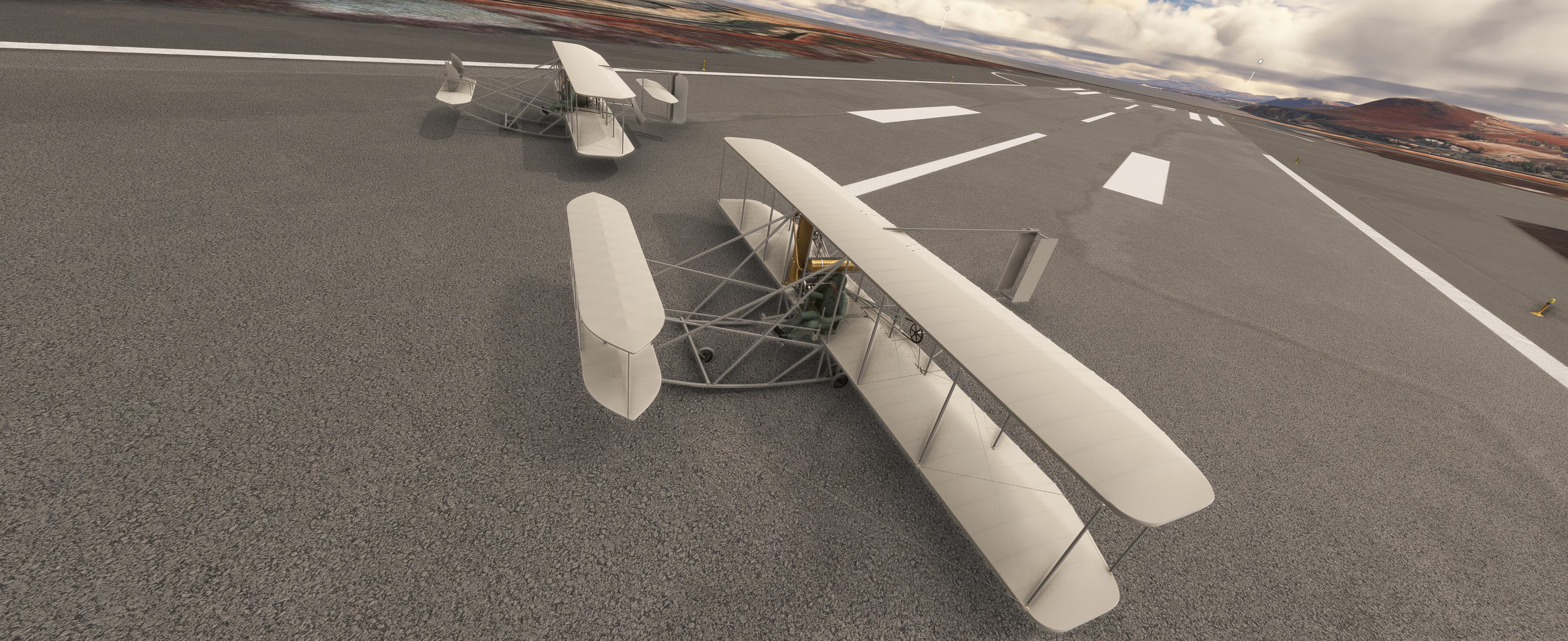
Two Distinct Flight Models

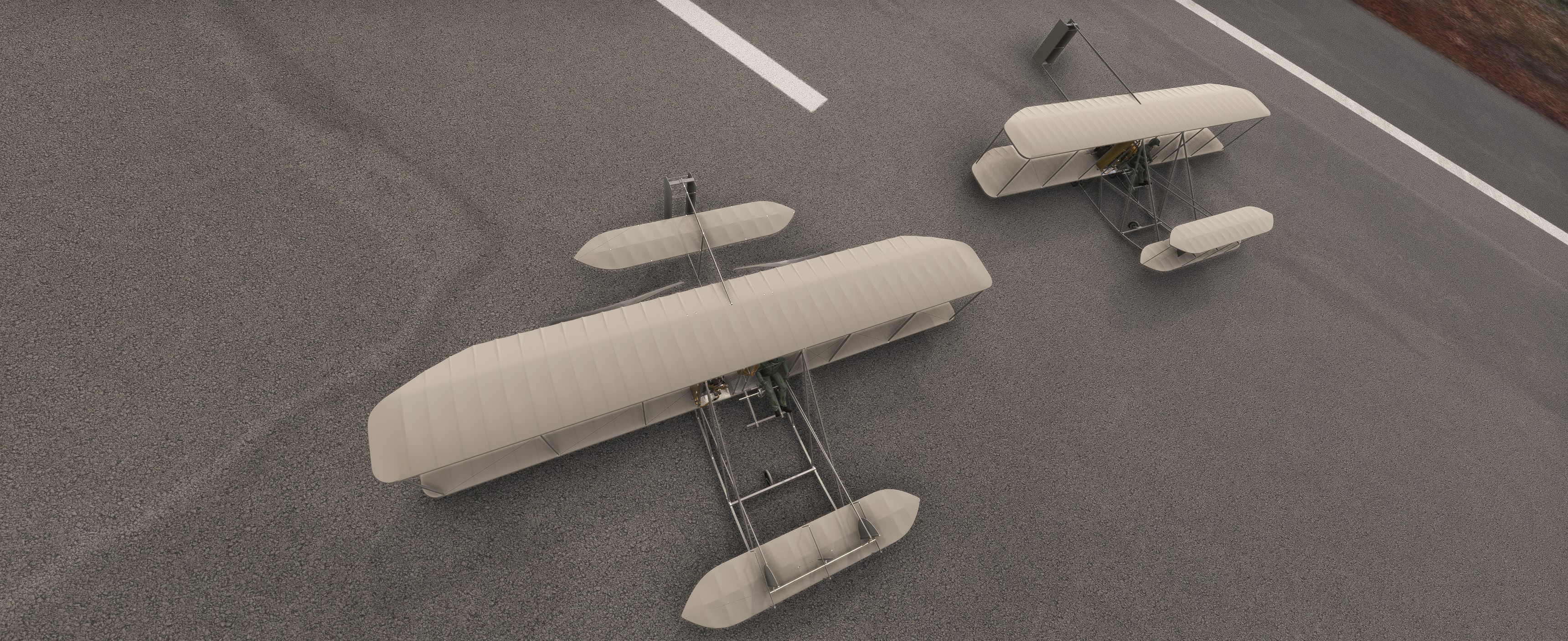
1909 and 1910 Wright Military Flyers flying together 1909 and 1910 Wright Military Flyers comparison

1909 Smithsonian Institution Version

The original two-seat, twin-canard configuration. This model accurately reflects the aircraft's extreme pitch instability. The pilot must constantly anticipate and actively "fly" the nose to prevent severe stalls that force the aircraft into a dangerous tail slide.

  • • Empty Weight: 735 lbs
  • • Fuel Capacity: 6.33 Gallons
  • • Inherently unstable pitch

1910 Army Modified Version

Reflecting later field modifications, this single-seater features a massive 43.3-gallon fuel tank and a rear horizontal stabilizer. The pilot must actively counter a dynamic center of gravity shift as the heavy fuel load burns off.

  • • Fuel Capacity: 43.3 Gallons
  • • Improved pitch stability
  • • Single seater